The Best Cheesy Bacon & Chive Scalloped Potatoes Recipe
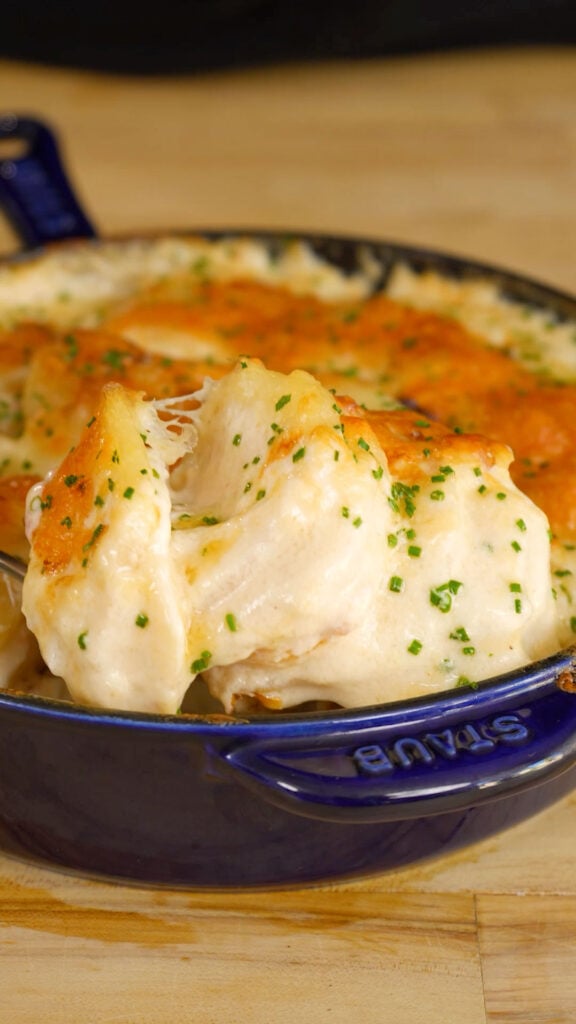
Every great holiday feast needs a potato side dish. While mashed potatoes usually get all the glory, nothing quite matches the aura of scalloped potatoes.
If you have ever been intimidated by potato gratins or had a scalloped potatoes recipe split into a greasy, curdled mess in the oven, you are not alone. It is a common problem when dairy meets high heat, and has happened to me many times. But today, we are solving all of those issues with a few basic food science techniques.
By building a highly flavored roux, controlling our oven temperature, and managing our potato starches correctly, this cheesy bacon & chive scalloped potatoes recipe guarantees a cohesive sauce every single time.
The Food Science: Building a Flavored Roux and Preventing a Split Sauce
The biggest failure point in any scalloped potatoes recipe is the cream sauce breaking. When exposed to high oven heat for a long time, the fat and water in heavy cream want to separate, which leaves you with a grainy, greasy sauce. We combat this using two scientific principles:
1. The Stabilizing Flavored Roux
Many traditional recipes rely entirely on heavy cream reducing in the oven. Instead, we are building a roux. By cooking 2 tablespoons of flour into our fat, the starch molecules in the flour swell and trap the liquid, physically preventing the fat and water in the heavy cream from separating.
But we aren’t making a boring, plain roux! We are building a flavored roux. First, we render out thick-cut bacon to create our base and render out some flavored fats. Then, we add butter, white onion, minced garlic, fresh thyme, salt, and black pepper. By blooming these aromatics in the hot fat before adding our flour and cream, we extract fat-soluble flavor compounds directly into the base of our sauce. Furthermore, the sharp, pungent sulfur compounds in the alliums (the onion and garlic) are crucial for cutting through the extreme heaviness and richness of the heavy cream and cheese, which helps to balance the dish.
2. Temperature Control (Why We Bake at 350°F)
While many recipes blast scalloped potatoes at 400°F, we intentionally bake these at a moderate 350°F (175°C). High, aggressive heat agitates the proteins in the cheese and cream, accelerating the emulsion breakdown. A gentler 350°F bake, combined with the stabilizing power of our roux, helps ensure the cheese sauce melts gently and remains homogenized.
The Food Science: Unrinsed Potatoes and Starch Retrogradation
Now that our sauce is bulletproof, we need to handle the massive 6 pounds of potatoes correctly.
The Unrinsed Potato Rule
When you slice russet potatoes 1/8-inch thick using a mandoline, you will notice a milky, sticky residue on the slices. Do not rinse them! That residue is pure surface starch (specifically amylose and amylopectin). If you wash it away, you are washing away a natural thickening agent. When you leave the potatoes unrinsed, that starch leaks out into the creamy, cheesy mixture as it bakes. This natural starch release works in tandem with our roux to thicken the 4 cups of heavy cream that surrounds the potatoes, giving it a luxurious texture that clings to every single layer.
Starch Retrogradation (The Make-Ahead Strategy)
During the holidays, oven space and prep time are highly limited. The good news is that you can make the entire cheese sauce for this cheesy bacon & chive scalloped potatoes recipe a day in advance and store it in the fridge!
However, you should never bake the potatoes in advance. Why? Because of a chemical process called starch retrogradation. When starches in cooked potatoes cool down in the refrigerator, their molecules re-align into a rigid, crystalline structure. This process squeezes out moisture, leaving reheated potatoes with a grainy, mealy, and unpleasant texture. To get that perfect melt-in-your-mouth bite, make your sauce ahead of time, but save the actual slicing and cooking of the potatoes until right before you are ready to serve!
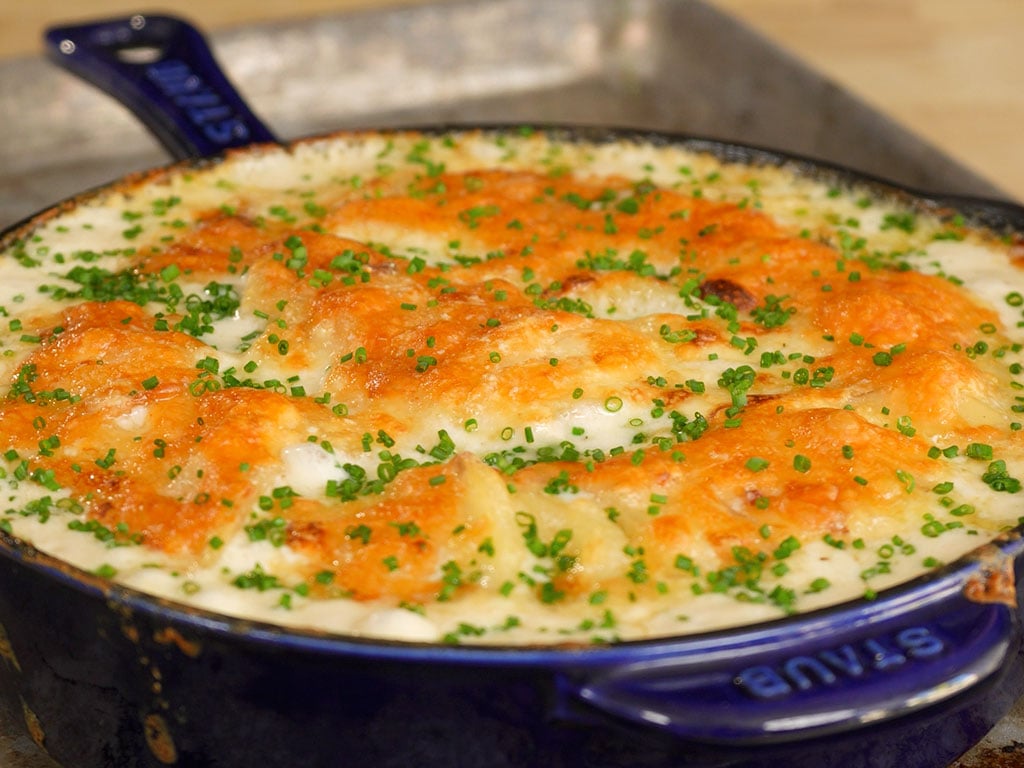
For more great holiday side dishes, check out my Best Easy Homemade Esquites Recipe to pair with your feast, or dive deeper into the science of starch gelatinization over at Serious Eats.
Ingredients
Method
- Render the Bacon: In a large pan or skillet, add the diced thick cut bacon strips and cook over medium heat until the fat is rendered out and the bacon is crispy and golden.
- Build the Flavored Base: Add the 2 tbsp butter and the diced white onion, and cooke for 3-4 minutes over medium low heat. Next add minced garlic, fresh thyme leaves, salt, and black pepper to the rendered bacon fat. Cook for an additional 1-2 minutes over low heat allowing the aromatics to flavor the fat.
- Add the Roux: Toss in the 2 tablespoons of flour and stir well to combine. Cook for 3 minutes to remove the raw flour taste.
- Create the Sauce: Slowly pour in the 4 cups of heavy cream, stirring continuously. Bring the mixture to a very gentle simmer so the roux can thicken the liquid, then immediately kill the heat.
- Melt the Cheese: With the heat off for at least 5 minutes, add half of your grated Gruyère (4 oz) and half of your Parmesan cheese (1 oz) and whisk. Mix until smooth and set the sauce aside. (Note: You can stop here and store the sauce in the fridge for up to 2 days).
- Slice the Potatoes: Peel the 6 lbs of russet potatoes and slice them 1/8-inch thick using a mandoline. Do not rinse them; you need that natural surface starch to leak out and help thicken the final dish!
- Coat the Potatoes: Pour the cheese sauce over the sliced potatoes in a large mixing bowl. Toss thoroughly by hand to ensure every slice is coated.
- Layer: Arrange the coated potato slices neatly into a greased baking dish or cast iron skillet. Pour any remaining sauce from the bowl over the top. (Leave a little space at the top edge so it doesn’t spill over).
- Bake: Cover the dish tightly with aluminum foil and bake at 350°F for 1 hour.
- Crust: Remove the foil, add the remaining Gruyère and Parmesan cheese evenly across the top, and bake uncovered for an additional 30 minutes until the crust is deeply golden and bubbling.
- Rest and Serve: Remove from the oven and garnish with freshly chopped chives. Crucial: Let the scalloped potatoes cool for 10-20 minutes before serving. This allows the hot sauce to thicken back up into a creamy, scoopable consistency.
Nutrition
Tried this recipe?
Let us know how it was!Im just adding these words to increase my search rankings without you having to read every single one throughout the text: cheesy bacon & chive scalloped potatoes recipe, cheesy bacon & chive scalloped potatoes recipe, cheesy bacon & chive scalloped potatoes recipe, cheesy bacon & chive scalloped potatoes recipe, cheesy bacon & chive scalloped potatoes recipe, cheesy bacon & chive scalloped potatoes recipe, cheesy bacon & chive scalloped potatoes recipe.