How Boba Shops Make Authentic Thai Tea Boba (The Food Science)
If you have ever tried making Authentic Thai Tea Boba at home, you have probably run into the exact same problem: the pearls start out perfectly chewy, but within an hour, they turn into hard, chalky rocks at the bottom of your glass. Most people blame the recipe, but the real issue comes down to food science.
Today, we are making an Authentic Thai Tea Boba that rivals your favorite boba shop. We are skipping the inferior “quick-cook” pearls and diving deep into the science of raw starch gelatinization and humectants. By the end of this guide, you will know exactly how to brew the perfect bold tea and how to keep your boba pearls incredibly soft and chewy all day long.
The Problem with “Quick” Boba Pearls
If you walk down the aisle of an Asian supermarket, you will likely see bags of boba pearls advertising that they are “ready in 3 minutes.” Stay away from these!
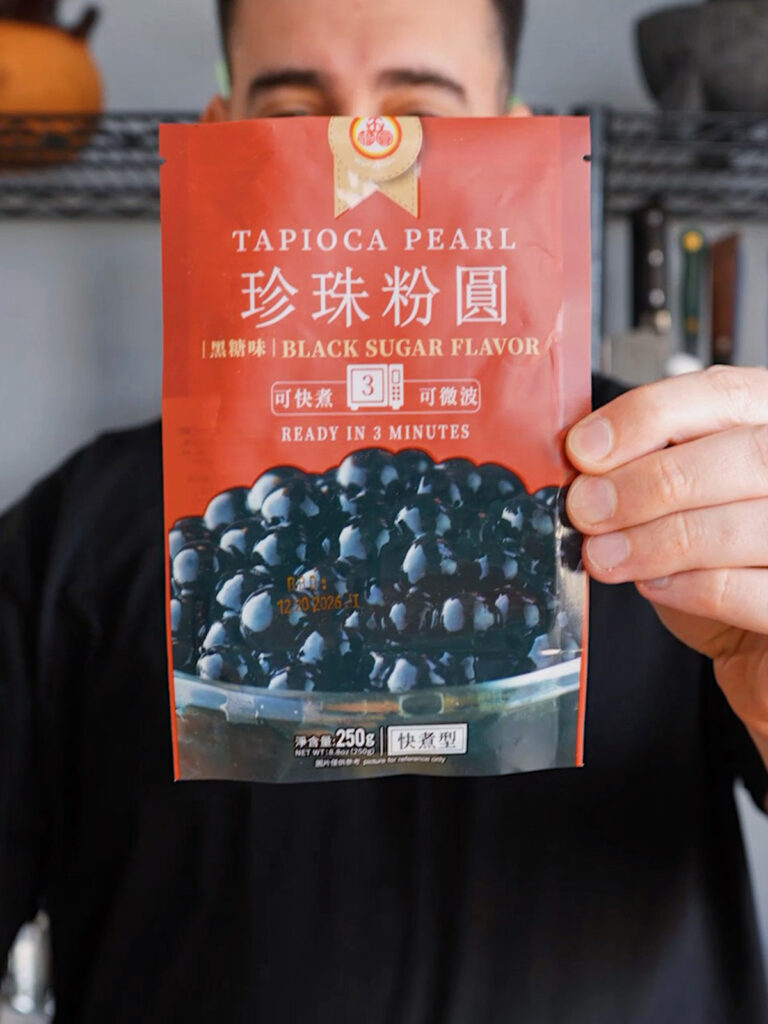
These quick-cook pearls have been pre-gelatinized. This means the starch inside the tapioca has already been cooked and dehydrated in a factory. While they are incredibly fast to prepare, their cellular structure has been permanently altered. They lack the structural integrity to hold onto moisture, which is why they turn rock-hard the moment they touch ice.
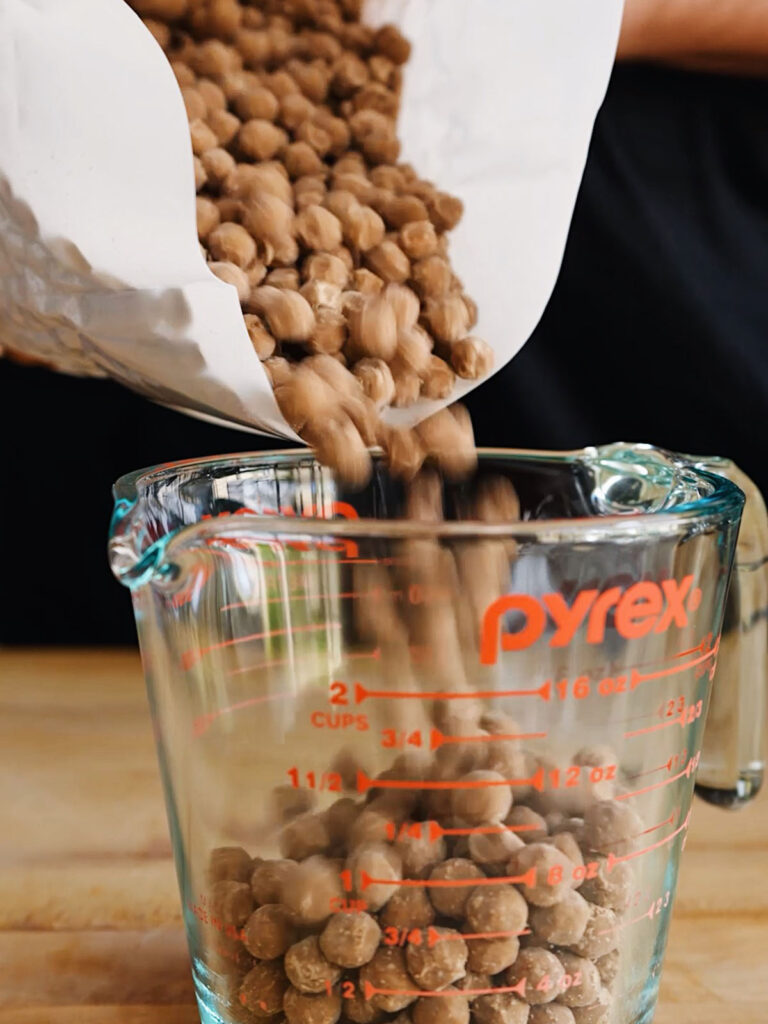
For a truly Authentic Thai Tea Boba, you need to use raw starch tapioca pearls. We are using 2 full cups of raw tapioca pearls for this recipe. Because the starch is completely raw, it requires a much more intensive cooking process, but the final texture is infinitely better.
The Food Science of Gelatinization
To transform raw tapioca starch into soft, chewy boba, we need to achieve complete starch gelatinization. This requires two things: intense heat and time.
First, bring a large pot of water to a rolling boil. Drop in your 2 cups of raw starch pearls and give them a stir so they don’t stick to the bottom. Turn the heat down to medium and let them boil vigorously for 30 minutes. During this phase, the heat is forcing water into the tightly packed starch granules, causing them to swell and burst.
Once the 30 minutes are up, turn off the heat, cover the pot with a tight-fitting lid, and let the pearls steep for another 30 minutes. This residual heat phase allows the very center of the pearls to finish cooking without turning the outsides into mush.
After the steep, drain the pearls and rinse them thoroughly with water. Rinsing strips away the excess surface starch that makes the water cloudy, leaving you with perfectly clean, translucent boba.
Food Science: Starch Gelatinization
The Secret to Chewy Authentic Thai Tea Boba: Humectants
Now that we have perfectly cooked our raw starch pearls, we have to protect them. The moment boba pearls are exposed to the cold ice in your Authentic Thai Tea Boba, the starches want to retrograde, or crystallize, which makes them hard.
To stop this from happening, we use the power of humectants. A humectant is a substance that actively attracts and retains moisture. Sugar is a fantastic natural humectant!
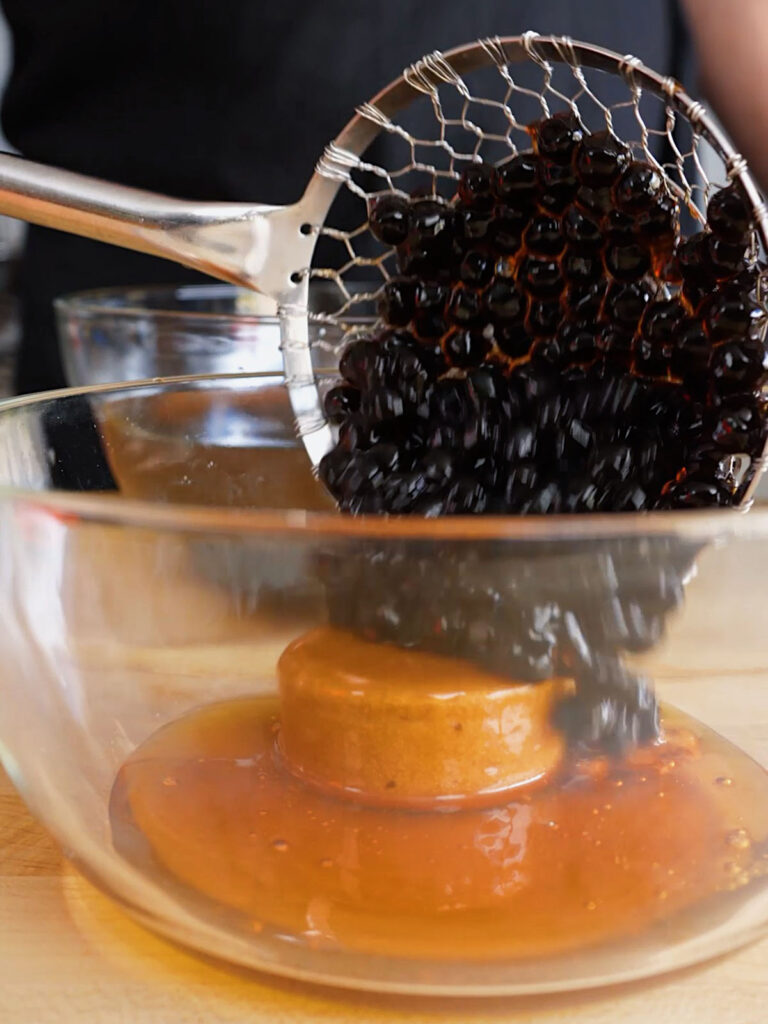
Immediately after rinsing your warm boba pearls, coat them generously in a mixture of dark brown sugar and simple syrup. The sugar acts as a protective barrier, locking the moisture inside the pearls and preventing retrogradation. This simple food science trick guarantees your boba stays soft, sweet, and perfectly chewy for hours.
Brewing the Perfect Thai Tea Base
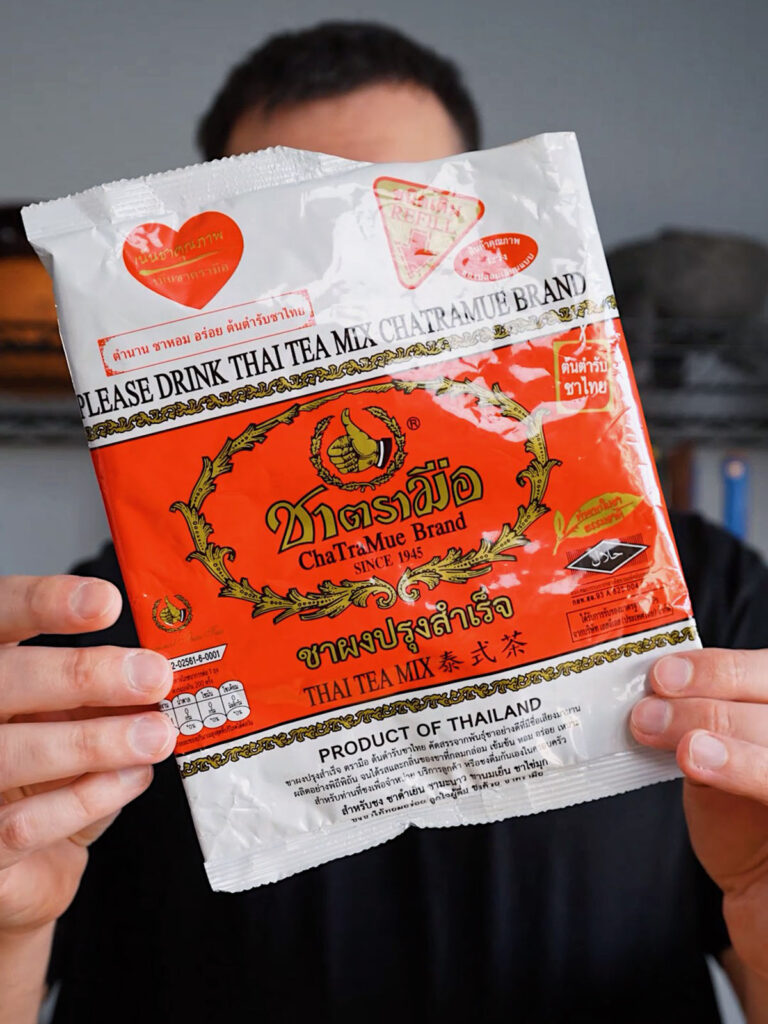
The hallmark of an Authentic Thai Tea Boba is the deeply spiced, earthy, and bold flavor of the tea itself. For this, we are using the gold standard: ChaTraMue brand Thai tea leaves.
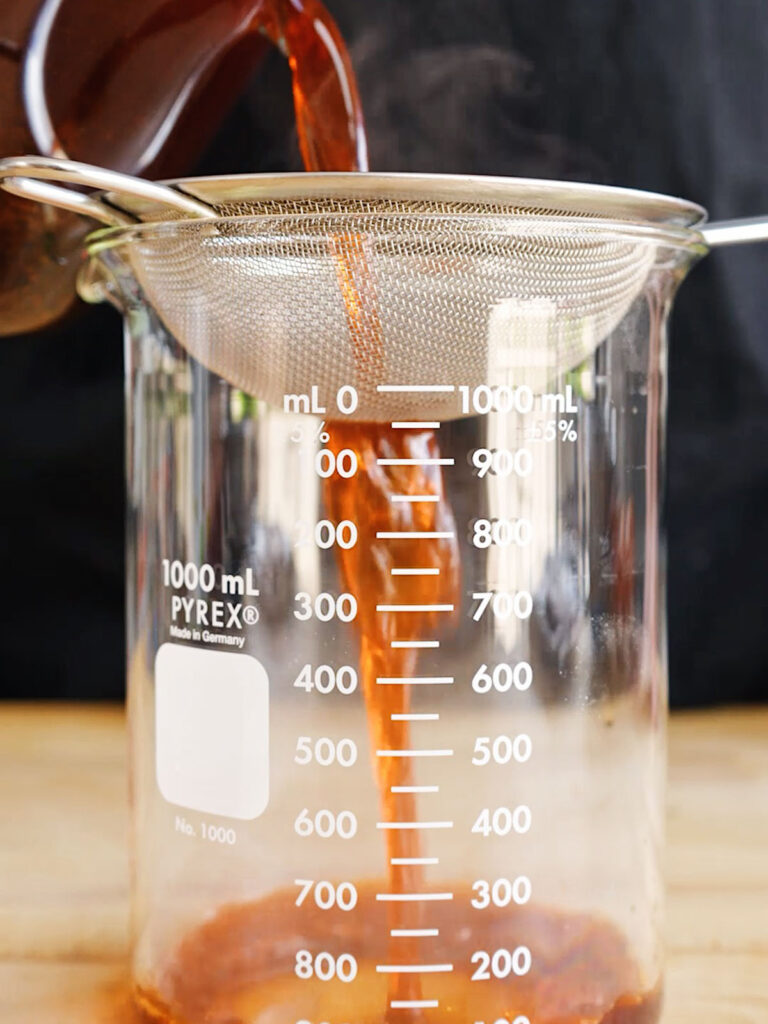
To get the perfect concentration that won’t get watered down by ice or milk, use this exact ratio:
- 1/2 cup of ChaTraMue tea leaves
- 6 cups of hot water
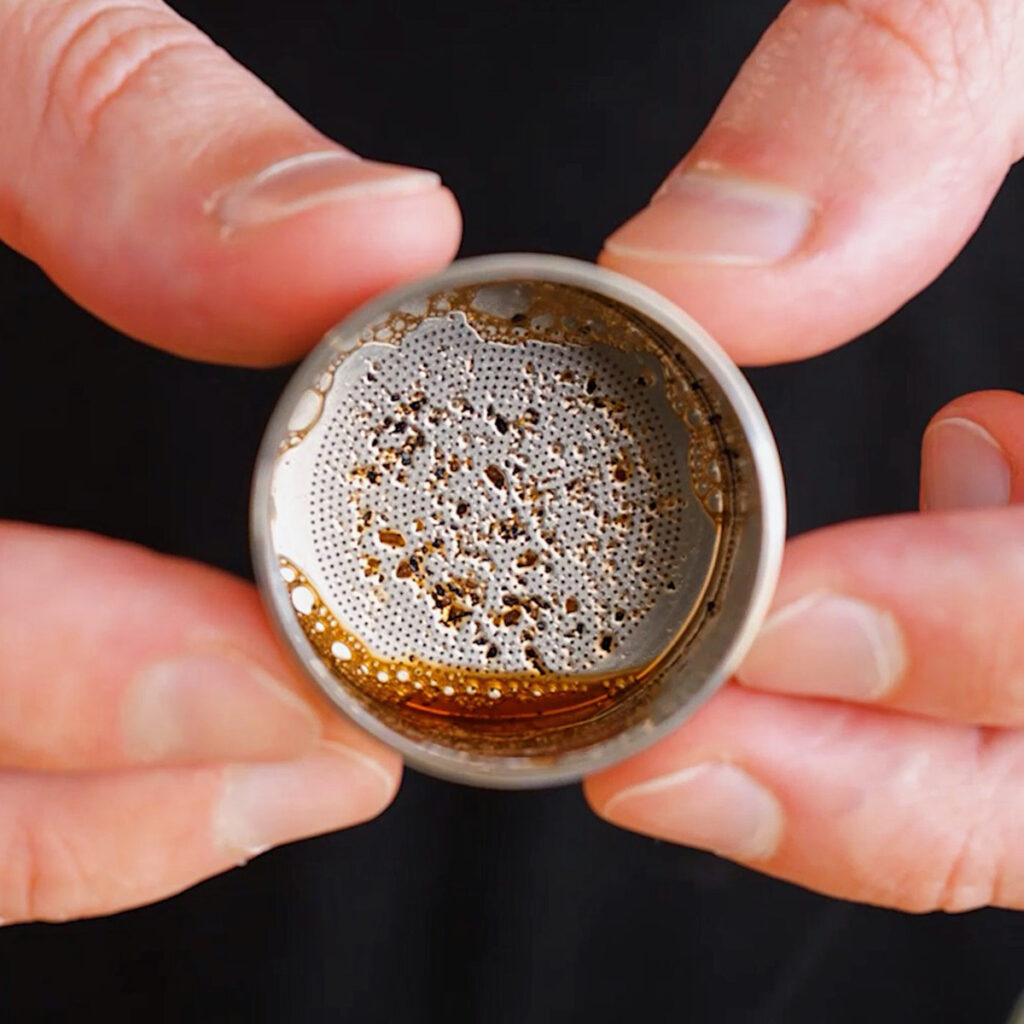
Steep the tea leaves in the hot water for a few minutes until the liquid turns a deep, vibrant amber color. Because authentic Thai tea uses loose leaves and crushed spices, you must pass the brewed tea through a very fine mesh strainer or a coffee filter to catch all the gritty particles. Let the strained tea cool to room temperature.
The Ultimate Creamer Ratio
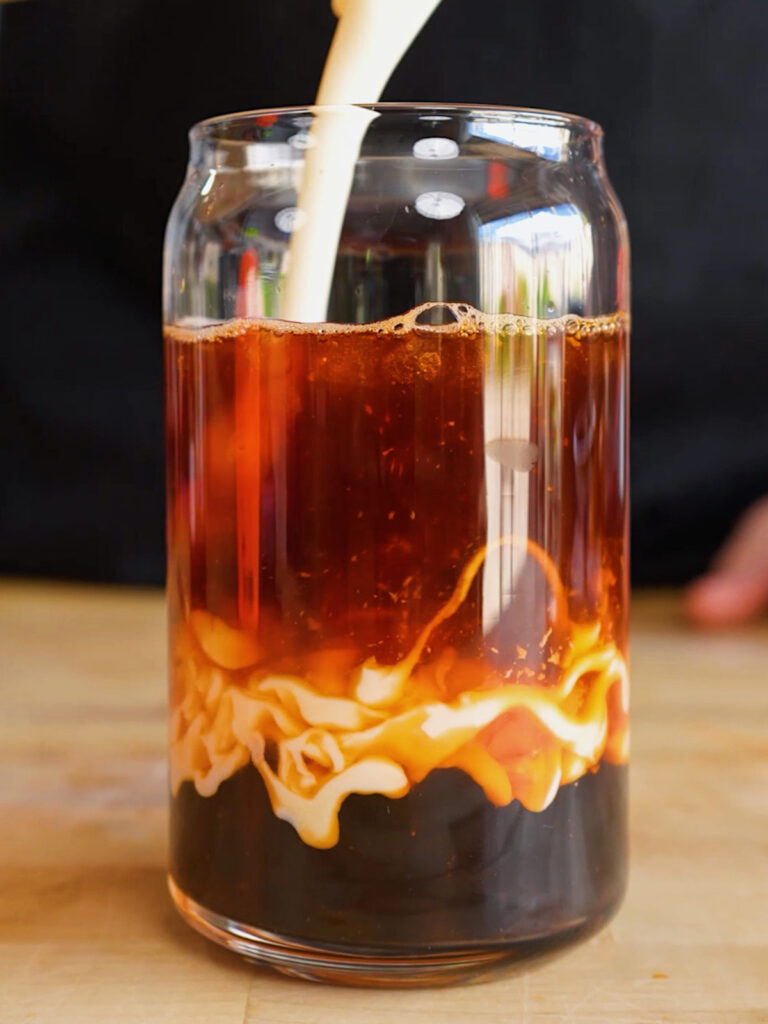
You cannot have an Authentic Thai Tea Boba without that signature rich, sweet, and creamy layer cascading down the glass.
Many boba shops use artificial non-dairy creamer powders, but we are upgrading to a foolproof, incredibly rich liquid creamer. The golden ratio is shockingly simple: equal parts heavy whipping cream and sweetened condensed milk. Mix a 1:1 ratio of these two ingredients together until perfectly smooth. The condensed milk provides the dense sweetness, while the heavy cream adds a luxurious mouthfeel that perfectly balances the bitter notes of the strong tea.
If you love sweet treats, give these Chocolate Covered Strawberries a try!
Assembling Your Authentic Thai Tea Boba
With all of our scientifically optimized components ready, it is time to build the ultimate Authentic Thai Tea Boba:
- The Base: Spoon a generous scoop of your syrup-coated, humectant-protected boba pearls into the bottom of a tall glass.
- The Ice: Fill the glass to the top with ice.
- The Tea: Pour your strongly brewed, strained Thai tea over the ice, filling the glass about three-quarters of the way to the top.
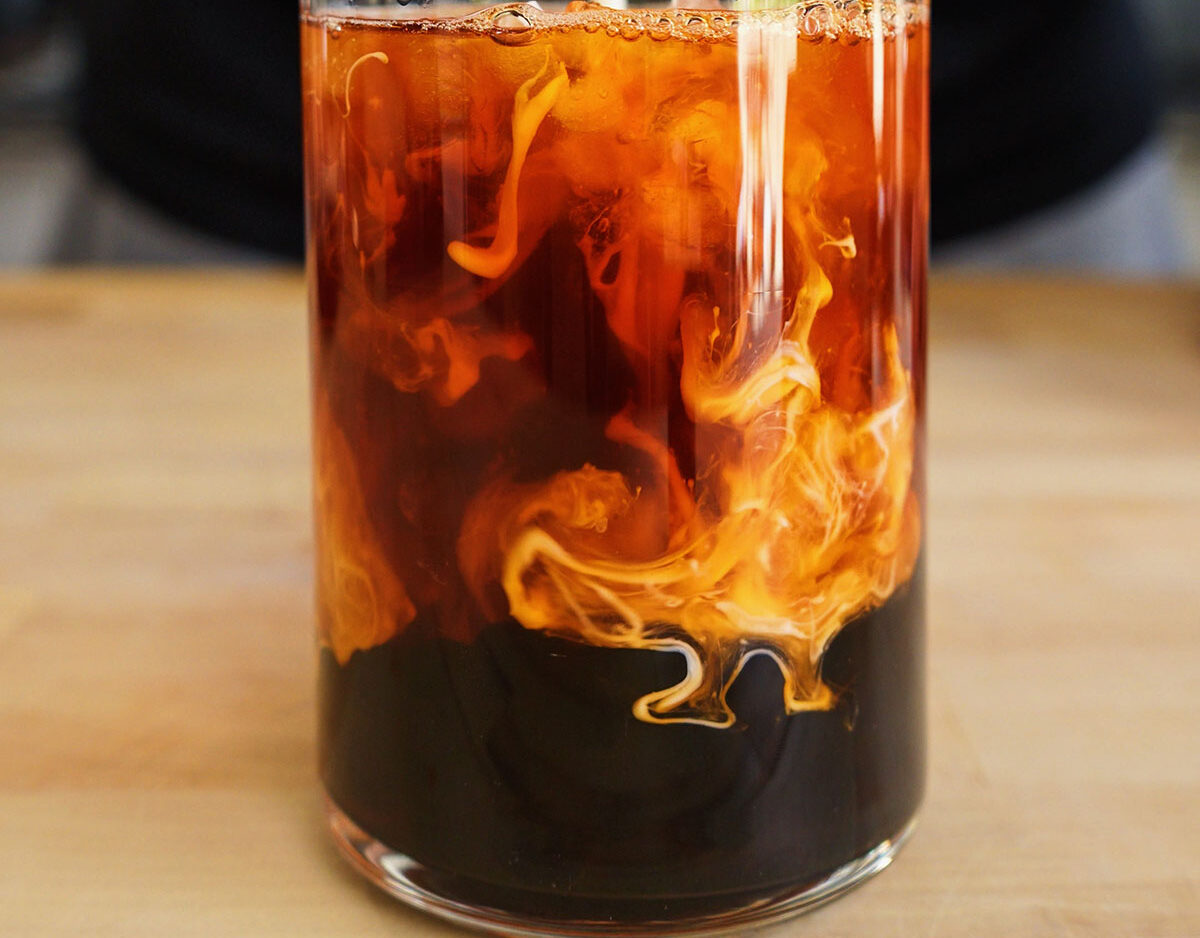
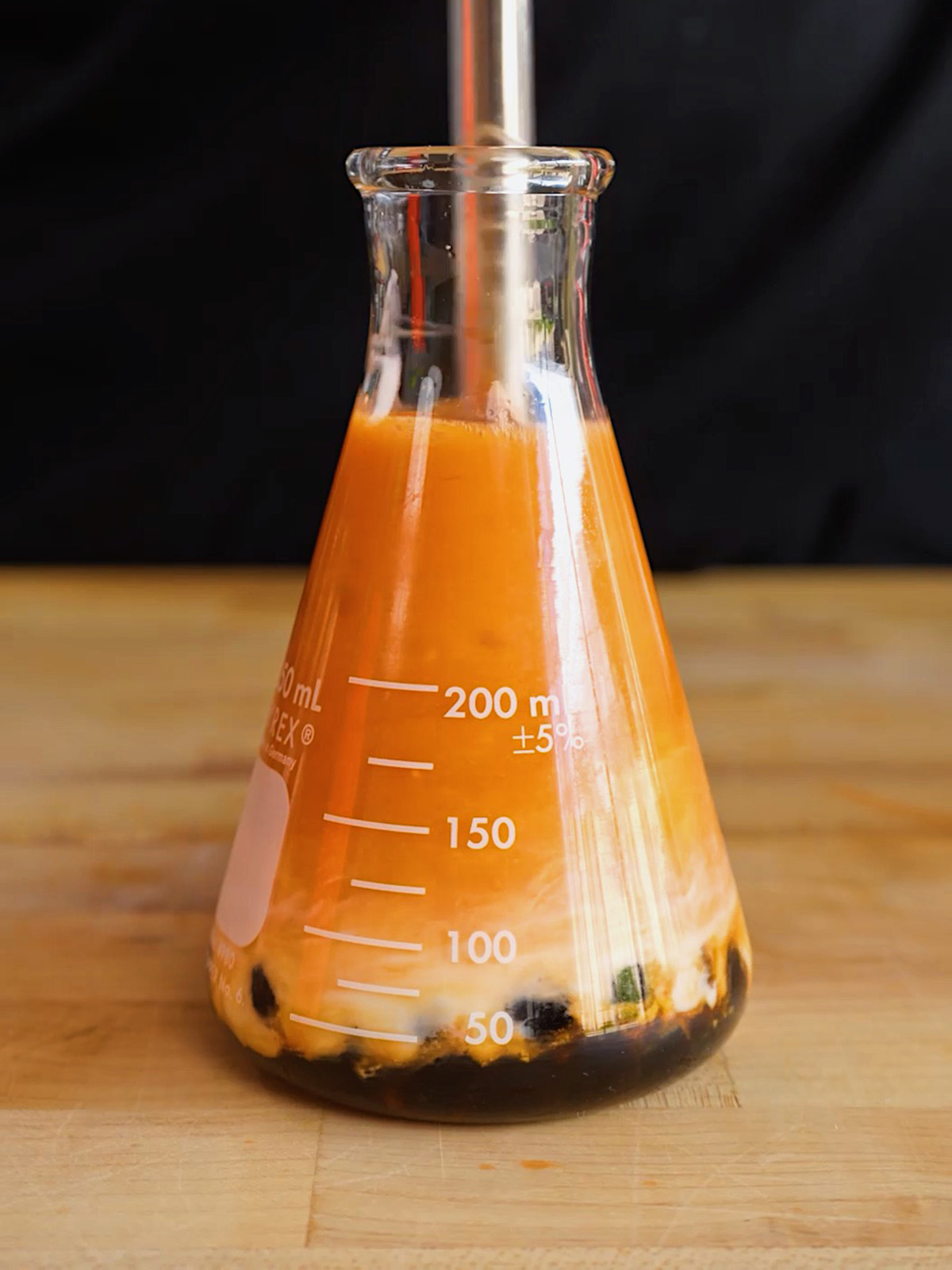
- The Creamer: Slowly pour your heavy cream and condensed milk mixture over the top. Watch the magic happen as the creamer cascades down through the bright orange tea!
Grab a wide boba straw, give it a stir, and enjoy the best, most scientifically perfect Authentic Thai Tea Boba you have ever made at home.
Check out the recipe card below for the exact measurements and print out the instructions for your next boba craving!
Authentic Thai Tea Boba
Ingredients
Equipment
Method
- Boil the Boba: Bring 10 cups of water to a rolling boil in a large pot. Add the 2 cups of raw starch tapioca pearls and stir immediately so they do not stick to the bottom. Reduce the heat to medium and boil for 30 minutes.
- Steep the Pearls: Remove the pot from the heat. Cover the pot with a tight-fitting lid and let the pearls steep in the hot water for exactly 30 minutes. This allows the residual heat to fully gelatinize the core of the starch.
- Brew the Thai Tea: While the boba is cooking, steep the 1/4 cup of ChaTraMue Thai tea leaves in 3 cups of hot water for 10 minutes. Pass the brewed tea through a fine mesh strainer or a coffee filter to remove all the gritty tea sediment. Set aside to cool.
- Rinse and Coat (The Humectant Step): Drain the boba pearls and rinse them thoroughly with water to wash away the excess surface starch. Transfer the rinsed pearls to a mixing bowl and immediately stir in the 1/2 cup of dark brown sugar and 1/2 cup of honey. Let the mixture cool for 10 minutes. This creates a humectant barrier that locks in moisture and keeps the boba perfectly chewy.
- Mix the Creamer: In a separate bowl or liquid measuring cup, whisk together the 1/2 cup of heavy whipping cream and the 1/2 cup of sweetened condensed milk until completely smooth and combined.
- Assemble the Drink: Spoon a generous scoop of your syrup-coated boba pearls into the bottom of a tall glass. Fill the glass to the very top with ice. Pour the brewed Thai tea over the ice until the glass is about three-quarters full. Finally, pour your creamer mixture over the top so it cascades down into the tea. Stir with a wide boba straw and enjoy!
Nutrition
Video
Tried this recipe?
Let us know how it was!Enjoyed this Authentic Thai Tea Boba Recipe? Here’s who’s behind it!
About the Author: Roice Bethel is a self-taught cook, food science educator, and content creator behind NOFLAKEYSALT — a platform dedicated to explaining the why behind great food. Born in Brazil and raised in Corona, California, Roice spent years teaching science before his viral cooking videos caught the attention of FOX’s Next Level Chef, where he competed under the mentorship of Gordon Ramsay. With over 1 billion views across TikTok, Instagram, YouTube, and Facebook, he’s built one of the most science-forward food communities on the internet. His mission is simple: help you cook smarter, not harder. Follow on Instagram | TikTok | YouTube | Facebook
For the tea- is it 1/2 cup or 1/4 cup of tea for 3 cups of water?
1/4 cup is what I prefer, but you can use up to a 1/2 cup if you want a stronger Thai tea flavor. I wouldn’t go past 1/2 cup of tea leaves for 3 cups water though.
I use a 1/4 cup of tea leaves but you can go up to a half cup if you want a stronger Thai tea flavor, I like the flavor of mine to be more on the milky side.
What tea leaves should I use if I want to make regular boba tea?
Usually boba is made with Thai tea. If you want something else I would recommend trying any kind of black tea. Experiment with the ratios of tea leaves to water to find the optimal flavor.