Best Homemade Yakitori Recipe: Perfect Skewers & Tare Sauce
If you want to know how to make restaurant-quality skewers right in your own backyard, you really only need two foundational elements: exceptional protein and an incredible, perfectly balanced tare sauce. Today, we are breaking down the ultimate homemade yakitori recipe that will completely change your grilling game.
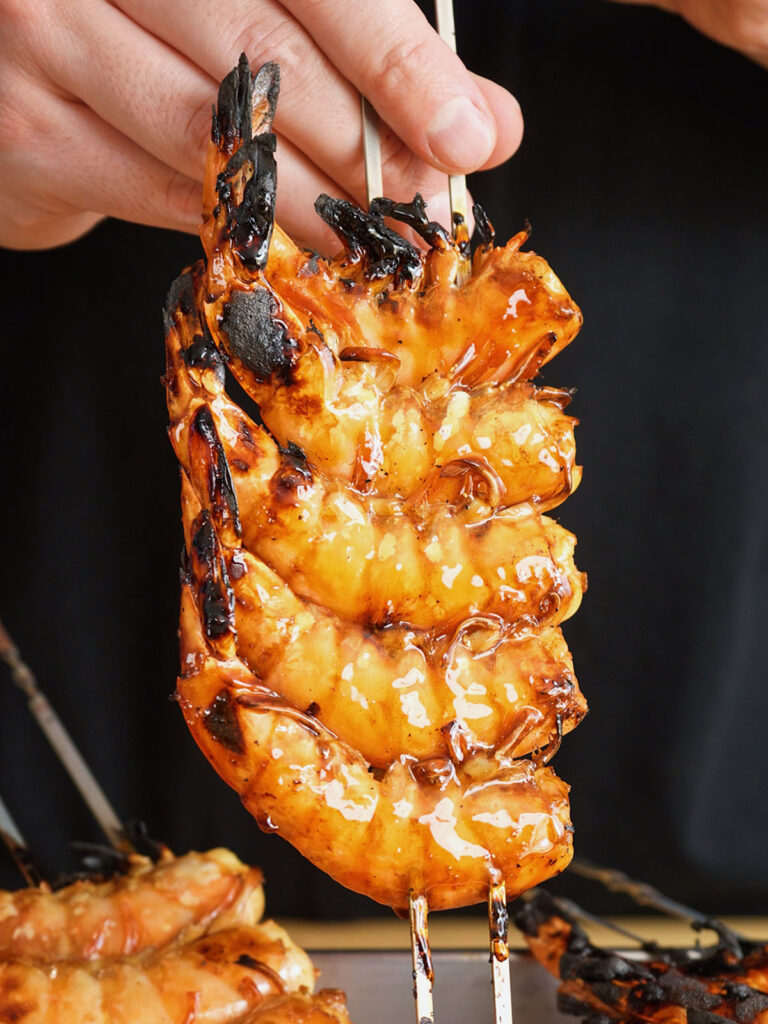
Whether you are utilizing high-grade beef, juicy chicken thighs, or fresh seafood, the secret to the perfect bite lies in the preparation, the application of heat, and the glaze. Let’s dive deeply into the food science and professional techniques that make this homemade yakitori recipe a massive step up from your average weekend barbecue.
The Importance of Sourcing High-Quality Protein
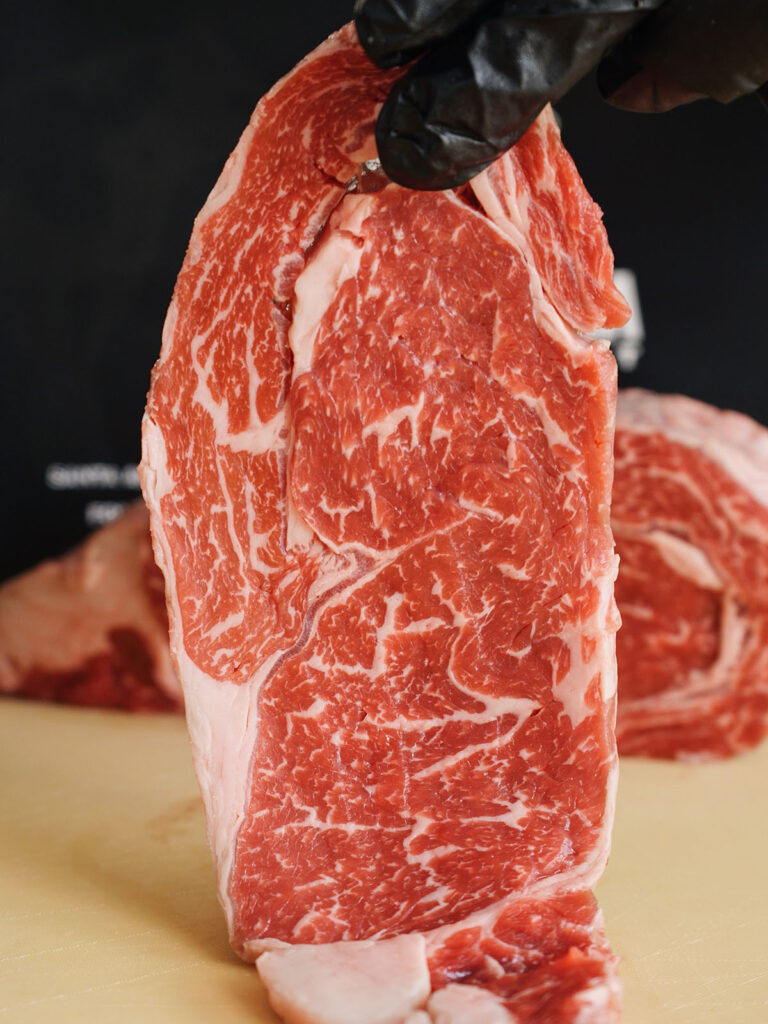
Because a homemade yakitori recipe relies on so few ingredients, there is nothing for subpar meat to hide behind. The protein is the absolute star of the show. Sourcing high-quality, well-marbled, and fresh cuts of meat is crucial for achieving that melt-in-your-mouth texture.
For the best results, skip the standard supermarket cuts if you can. I always get my proteins at La Carniceria Meat Market here in Southern California. They provide some of the highest-quality cuts available, ensuring that the foundation of your skewers is absolutely flawless before they ever hit the grill.
The Secret Sauce: Mastering the Tare
The backbone of any authentic homemade yakitori recipe is the tare (pronounced tah-reh). It is a beautifully simple, sweetened soy glaze that caramelizes over the hot coals and gives the meat that iconic sticky, savory, and sweet finish.
The most basic way to make a tare is utilizing a simple 1:2:2 ratio:
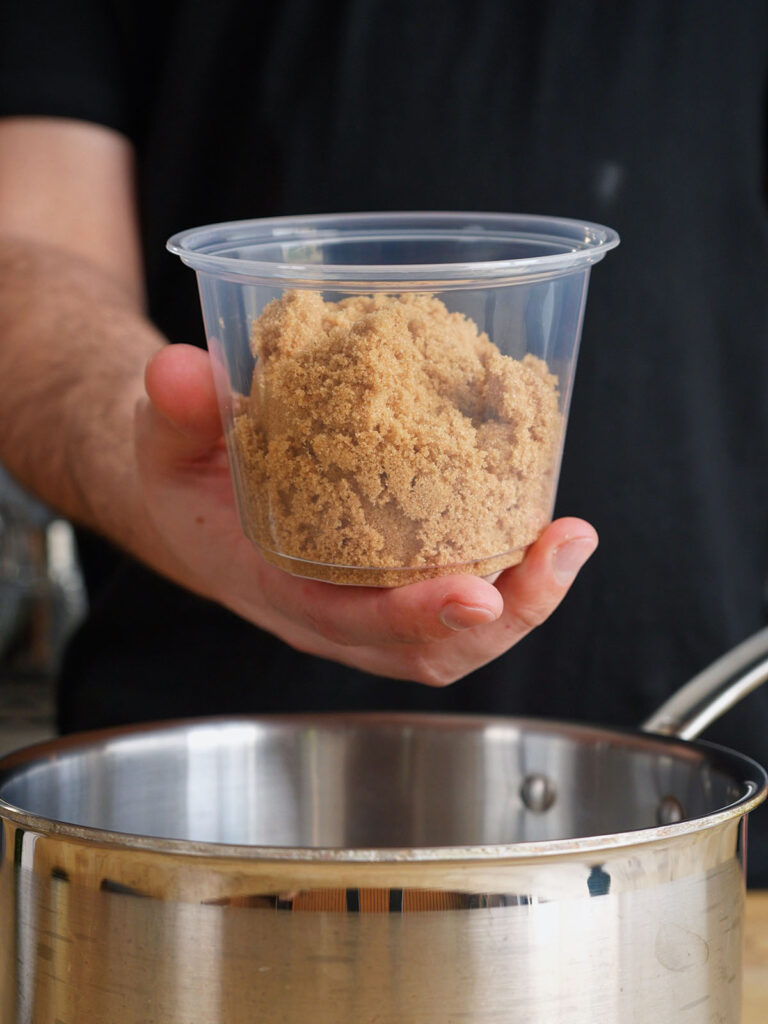
- 1 cup Packed Brown Sugar
- 2 cups Mirin
- 2 cups Soy Sauce
You simply mix these liquids and sugar together and simmer them over low heat for about 30 minutes until the mixture thickens slightly into a glossy glaze.
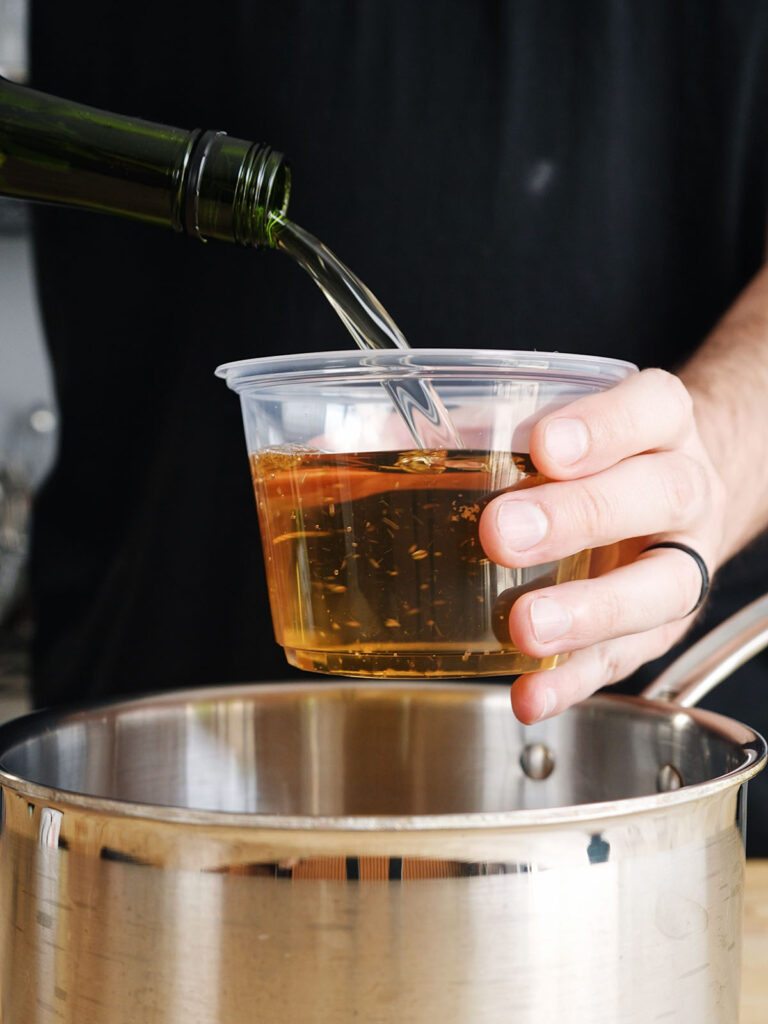
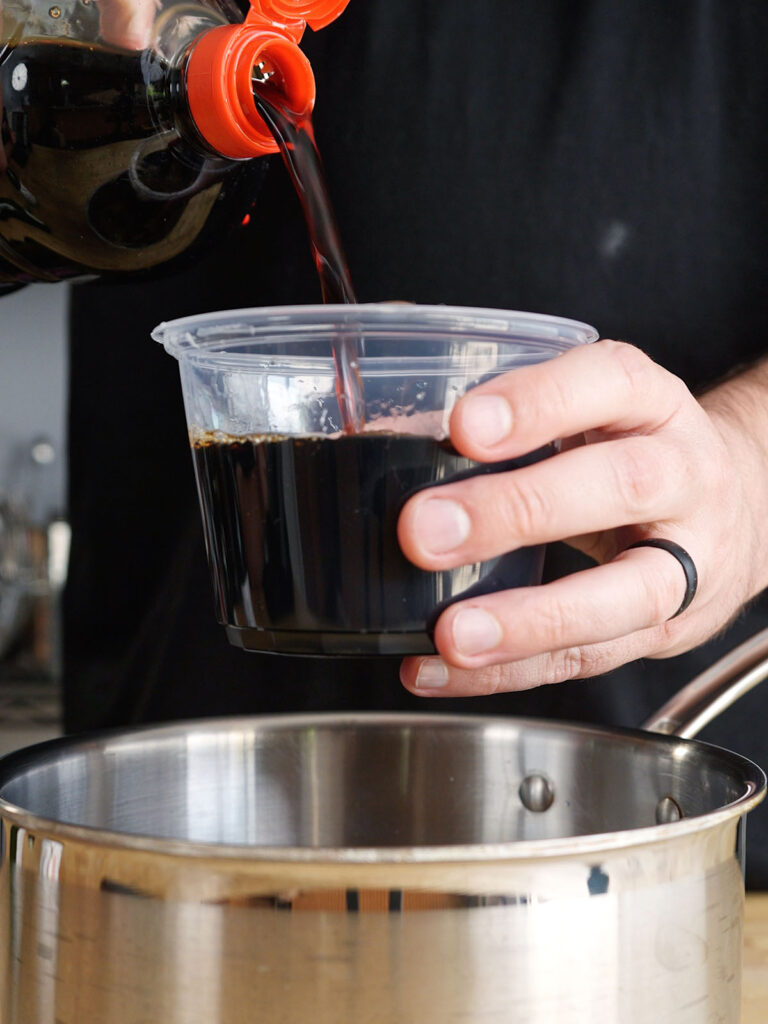
Pro Move: Elevate Your Tare While the basic recipe is fantastic, if you want to level up the flavor profile of your homemade yakitori recipe, you need to introduce smoke and savory depth right from the start. Take the meat trimmings from your skewers and some green leek tops, char them heavily over the open flame on your grill, and toss them directly into the simmering sauce. The rendered animal fat and the smoky, charred alliums will steep into the liquid, fortifying the tare and giving it a complex, aged flavor immediately.
The Food Science of the Perfect Skewer
Making a homemade yakitori recipe is straightforward, but understanding the why behind the culinary process makes it foolproof.
Why You Must Cook the Meat 80% Before Dipping
One of the biggest mistakes home cooks make when glazing meat is applying the sauce too early, or worse, dipping raw meat directly into their master sauce batch. For this homemade yakitori recipe, you are going to cook the skewers until they are 80% done before they ever touch the tare.
There are two major food science and safety reasons for this technique:
- Food Safety & Sauce Longevity: Traditional yakitori restaurants keep their master tare (known as motidare) for years, continually topping it off to build complex flavors. If you dip raw or undercooked poultry or beef into your tare, you are introducing raw meat juices and harmful bacteria (like salmonella) into your sauce, entirely ruining the batch. By waiting until the meat is 80% cooked, the surface temperature of the protein is high enough that surface bacteria have been effectively killed off. This keeps your master tare safe, sterile, and shelf-stable for future use.
- Preventing Scorched Sugar: Tare is packed with carbohydrates from the mirin and brown sugar. If you apply it to raw meat and leave it over a blazing hot grill for 10 minutes, those sugars will inevitably burn and turn bitter long before the center of the meat has finished cooking.
Salt First, Always
Even though we are dipping these skewers into a salty, umami-rich soy glaze, you must season the raw meat with salt before it hits the heat. Salt draws out water-soluble proteins to the surface of the meat. When those proteins hit the high heat of the grill, it kickstarts the Maillard reaction—the chemical reaction between amino acids and reducing sugars that gives browned food its distinctive, savory flavor. Pre-salting ensures a superior crust and a much better texture for your homemade yakitori recipe.
Equipment Tips for the Best Yakitori
To get the absolute most out of this homemade yakitori recipe, your equipment choices heavily dictate the final product.
- Binchotan Charcoal vs. Standard Grills: You will often hear marketing claims that Binchotan emits “far-infrared rays” that penetrate deeply to cook meat from the inside out. That is a culinary myth. In reality, because Binchotan burns so incredibly hot, it emits high-energy near-infrared radiation. These intense waves don’t penetrate deep into the meat; instead, they are immediately absorbed by the water molecules on the very surface. This rapid energy transfer instantly vaporizes surface moisture and kickstarts the Maillard reaction, creating a perfectly crisp crust in seconds. The center of the meat then cooks gently and evenly via thermal conduction. Furthermore, because Binchotan is nearly 100% pure carbon, it burns completely smokeless and odorless, ensuring your tare sauce is the only flavor you taste. However, if you don’t have access to Binchotan, any high-heat gas or standard charcoal grill will still get the job done.
- Metal Skewers Over Bamboo: Bamboo skewers are traditional, but using metal skewers is a brilliant food science hack. Metal is an excellent thermal conductor. When placed over the fire, the metal skewer heats up rapidly and helps to cook the meat from the very center, while the ambient heat of the grill cooks the outside. This dual-action results in a faster, more uniform cook. Plus, you never have to worry about soaking bamboo in water to prevent it from catching fire!
- The Pro Trim: Once you thread your meat and leeks onto the skewer, lay it flat on a cutting board and use a sharp knife to trim the uneven edges. Creating a perfectly uniform, rectangular cylinder ensures that every part of the skewer makes equal contact with the heat source, resulting in a perfectly even cook with no dry, overcooked jagged edges.
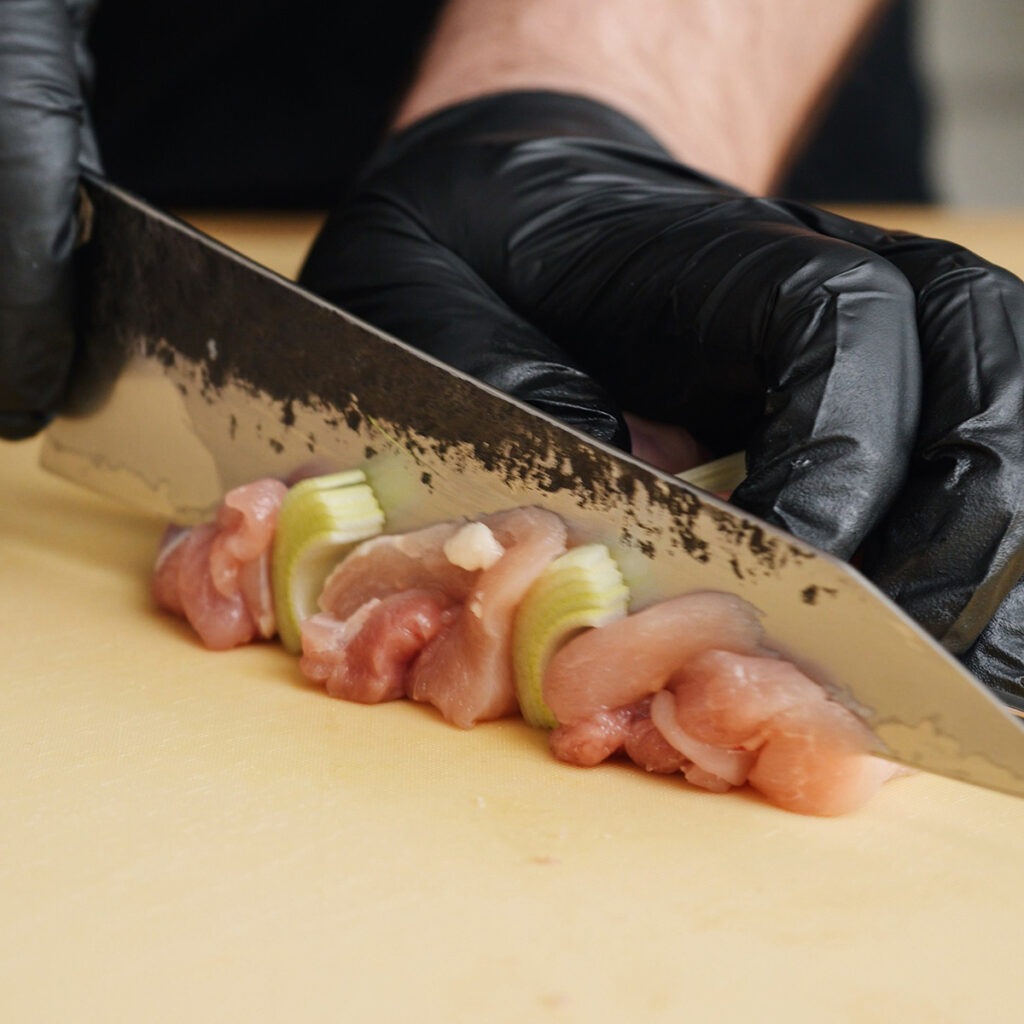
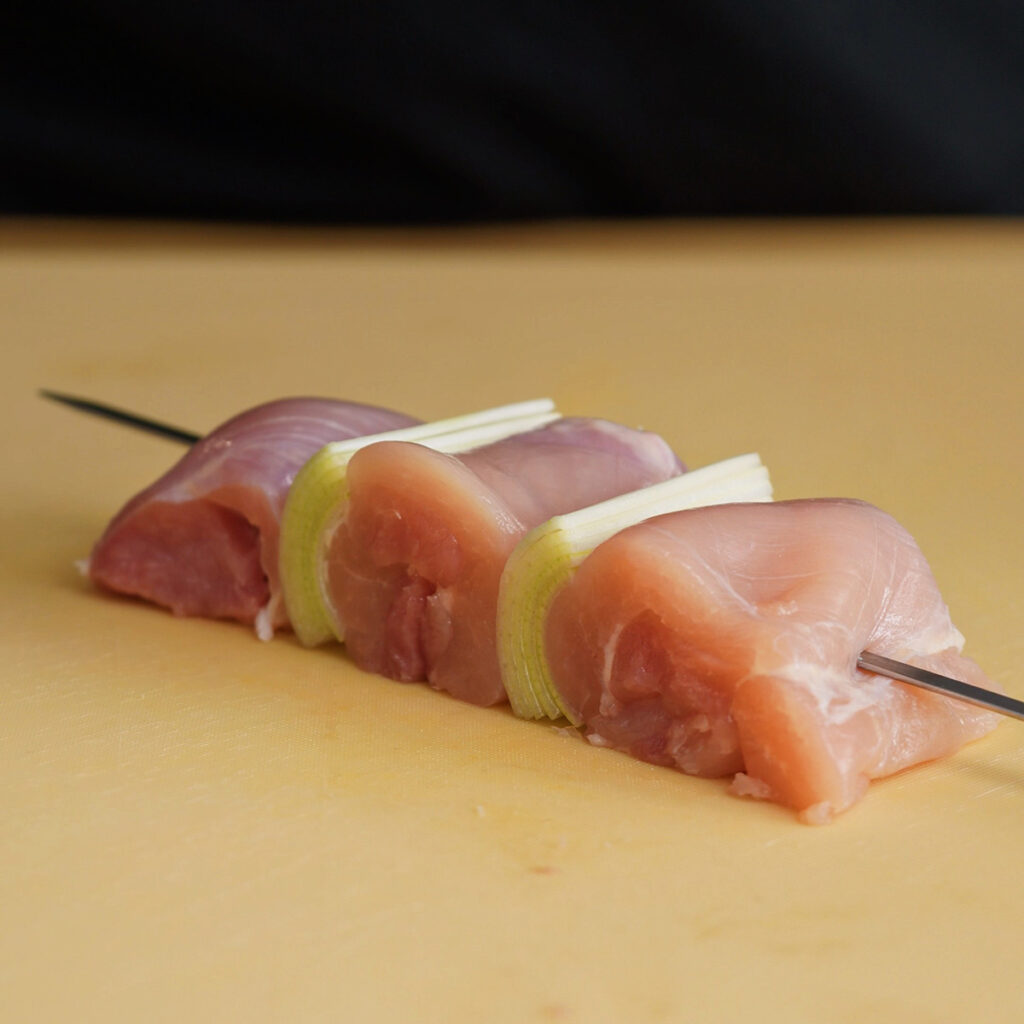
How to Cook and Glaze
Once your skewers are tightly packed, neatly trimmed, and properly salted, get them over high heat. Cook them until they reach that critical 80% doneness mark.
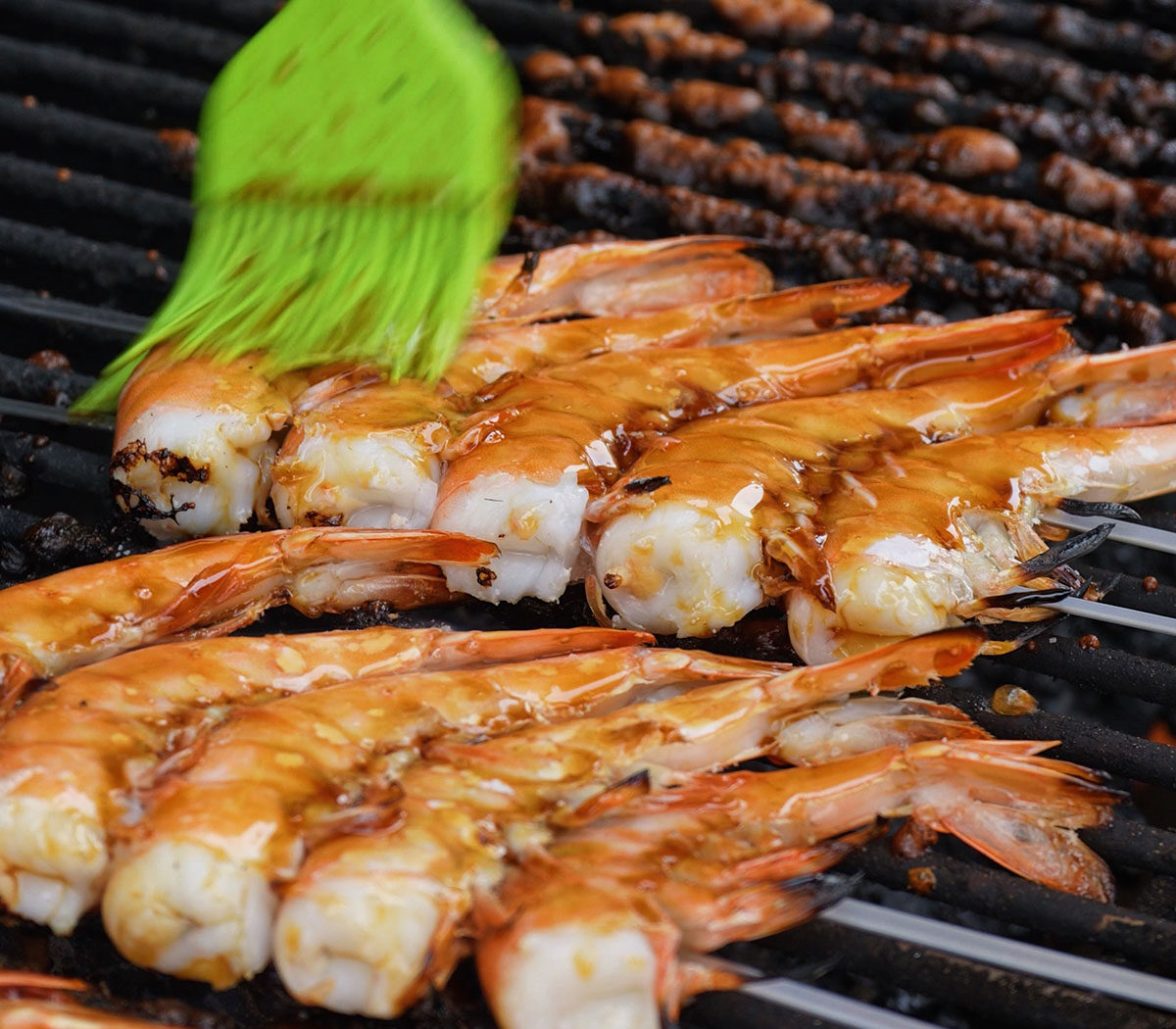
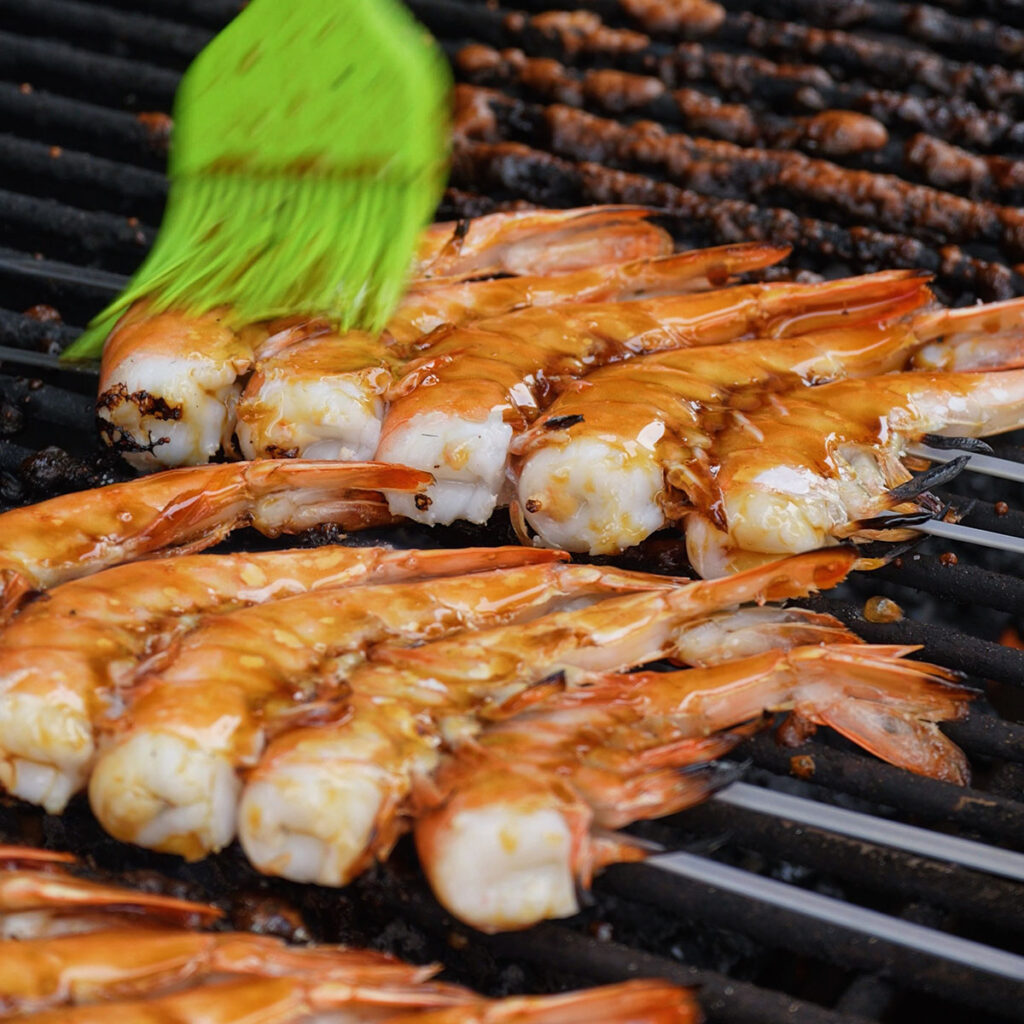
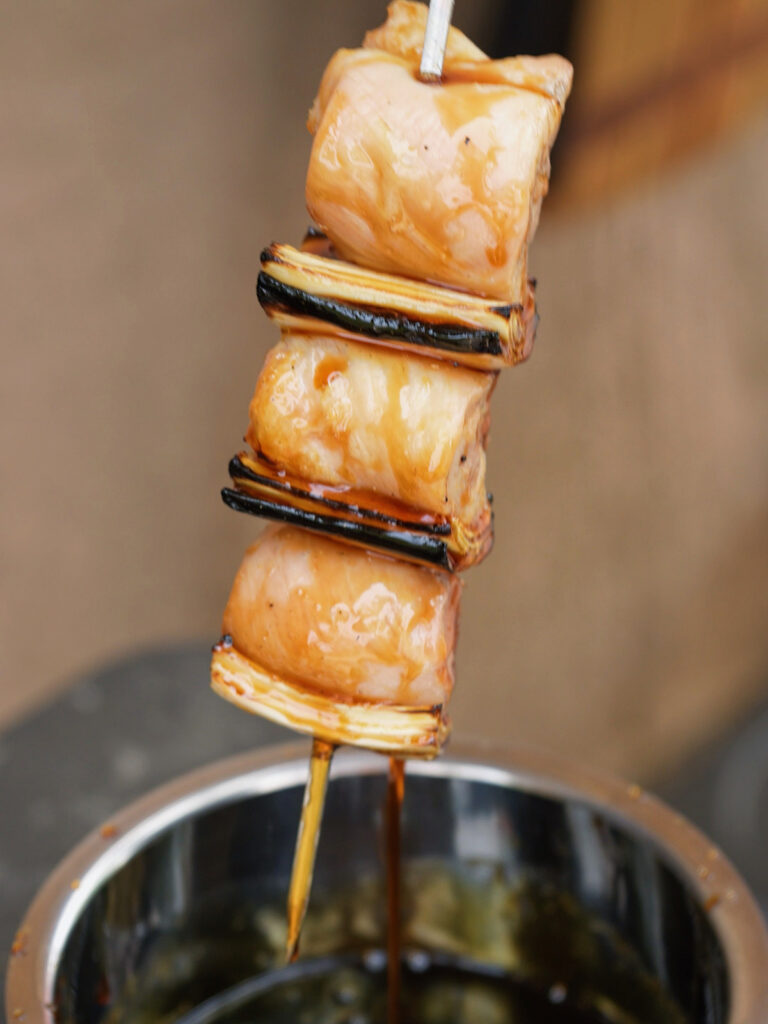
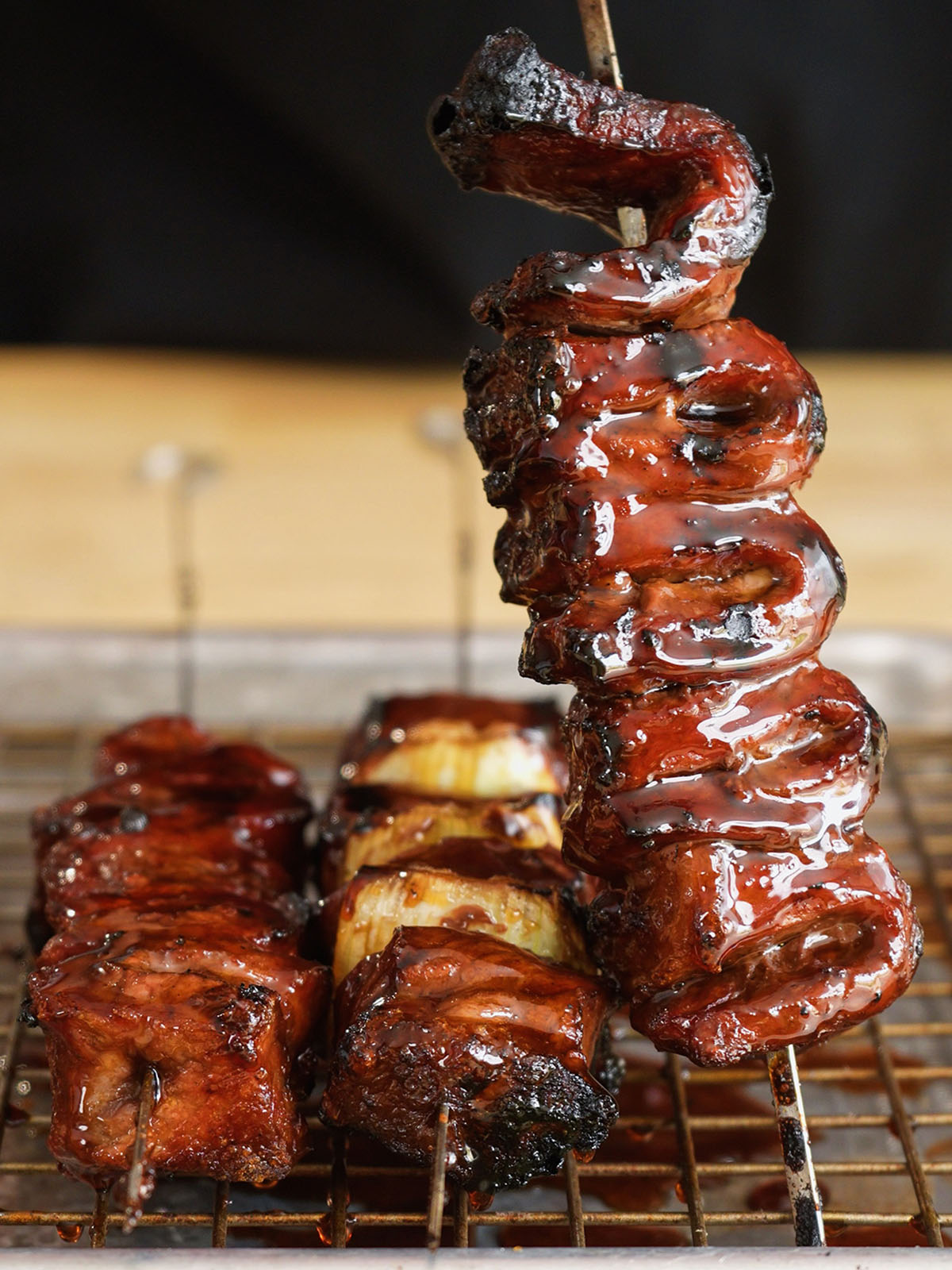
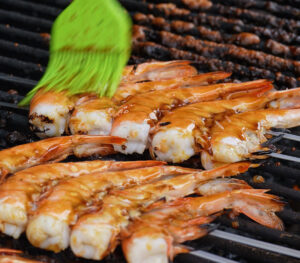
Take the skewer completely off the heat and dip it entirely into your tare (or brush it generously with a silicone basting brush). Place it back onto the high-heat grill for exactly 30 seconds per side. The intense heat will cause the water content in the sauce to rapidly evaporate, leaving behind the sticky sugars that will tack up and caramelize beautifully onto the meat. You can repeat this dipping and grilling process one or two more times to build up a thick, glossy, highly flavored lacquer.
Finish it off with a light dusting of Togarashi for a complex kick of heat, and enjoy the absolute best homemade yakitori recipe you have ever tasted.
Shop The Recipe
Upgrade your grilling setup with the exact tools I use for this recipe:
- Japanese Binchotan Charcoal
- Stainless Steel Flat Skewers
- Silicone Basting Brush
- Togarashi (Japanese 7-Spice)
Want a refreshing drink to go with this? Try my Authentic Thai Tea Boba!
Authentic Homemade Yakitori Recipe with Tare
Ingredients
Method
- Make the Tare: In a medium saucepan, combine the brown sugar, mirin, and soy sauce. Mix well and simmer over low heat for 30 minutes until slightly thickened. Remove from heat and let cool. (Pro Tip: Char meat trimmings and green leek tops on the grill and add them to the simmering sauce for extra depth of flavor).
- Preheat the Grill: While the tare simmers, preheat your grill to high heat (preferably using Binchotan charcoal).
- Prep the Skewers: Thread your bite-sized pieces of protein tightly onto metal skewers, alternating with pieces of leek.
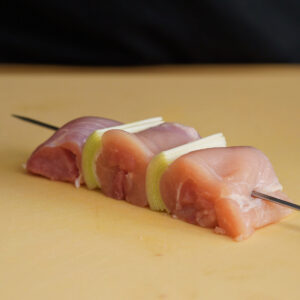
- Trim & Season: Lay the skewers flat on a clean cutting board and trim the edges so the meat forms a uniform rectangular cylinder. Season all sides generously with kosher salt.
- The First Grill: Place the skewers on the grill and cook until the protein is about 80% cooked through.
- Dip and Lacquer: Remove from heat and dip the skewers directly into the tare (or baste heavily). Return to the grill for 30 seconds per side until the sauce tacks up and caramelizes. Repeat this process 1 to 2 more times to build a thicker glaze.
- Garnish: Remove from the grill, sprinkle with Togarashi, and serve immediately.